Infernal Cycle Video Game
Infernal Cycle is a rogue-like platforming RPG set in a cyberpunk reimagining of Hell. Players take on the roles of damned sinners who must fight, explore, and piece together their forgotten pasts to attempt an escape. The game blends fast-paced combat, hidden-information systems, and narrative choices, creating an immersive experience where every action carries both mechanical and moral weight.
Format: Rogue-like platforming RPG
My Role: Lead Narrative Designer & Character Designer
Team Size: 4 people
Timeline: Sept 24 – Dec 24
Design Goals & Inspiration
The vision for Infernal Cycle was to create a stylish rogue-like, where mechanics reinforce the story. Our inspiration came from games like Hades and Dead Cells, but we wanted to push further into mechanical symbolism. Players learn about their characters’ sins and choices not through cutscenes, but through systems like Memory Shards and skill unlocks.
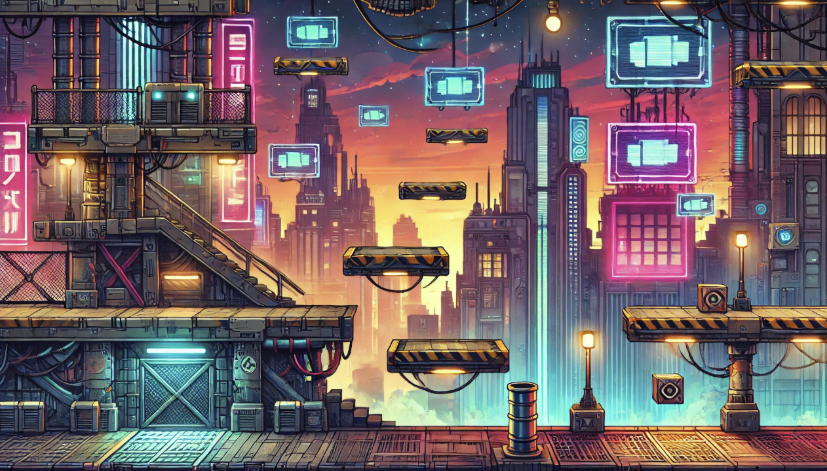
We grounded our design in two key goals: First, we accomplish storytelling through systems . Memory Shards double as backstory reveals and skill unlocks, blending narrative with progression. Second, we create contrast in aesthetics. Chibi-styled characters against neon hellscapes emphasize the tension between “cute” visuals and dark themes.
Design & Prototype Stages
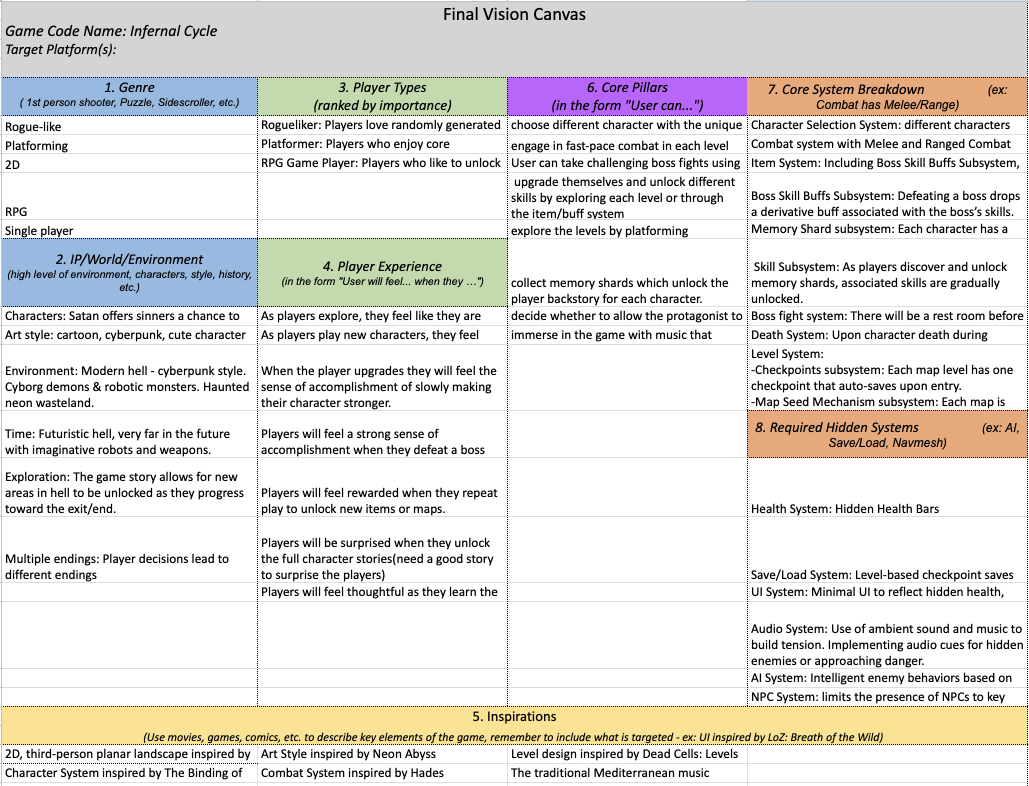
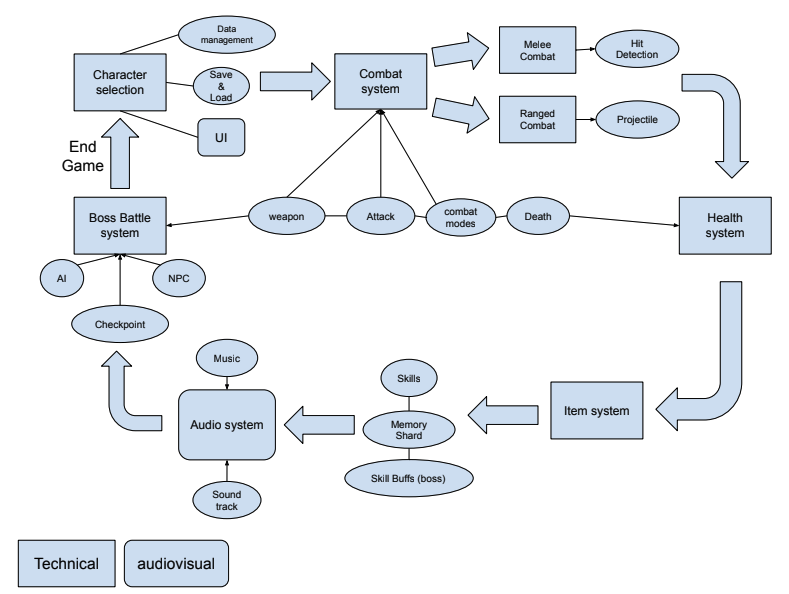
We began with vision canvases and feature breakdowns to outline core systems: combat, boss AI, checkpoint/death loops. We specified genres, target players, core pillars, core systems, IP/world/environment, player experiences, inspirations, and required hidden systems. Iteration then expanded into beat-by-beat progression: designing hubs, action stages, and bosses. Art prototypes experimented with palette and chibi style, aiming for a cyberpunk-meets-hell identity.
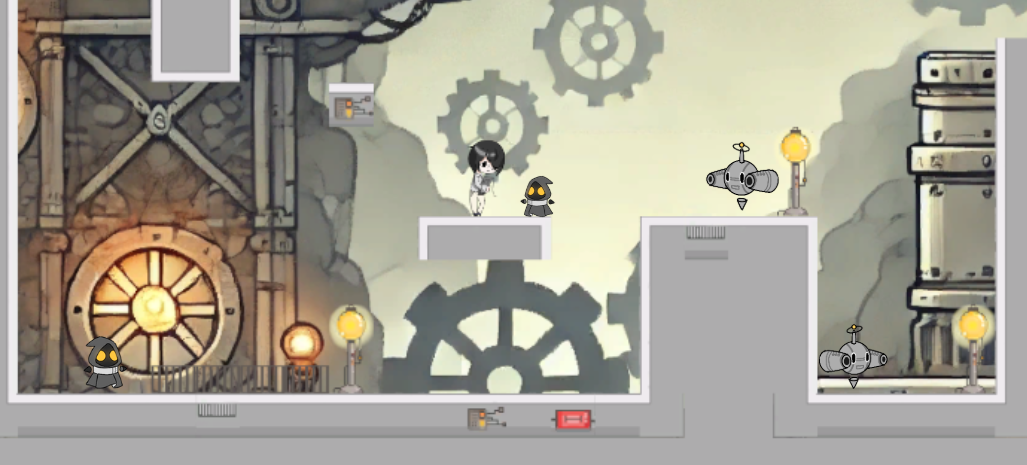
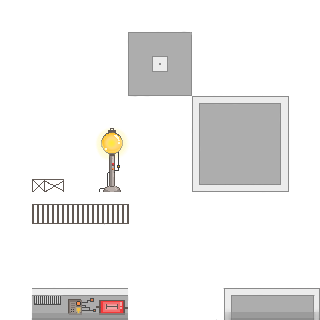
Short demo experimenting with player movements and arty style.

My Contributions
Narrative Writing: Fully authored the world description, character backstories, and branching ending framework, ensuring story progression was tightly tied to gameplay systems like Memory Shards.
Beat-by-Beat Design: Designed the full progression structure, including hub flow, action stages, and boss encounters, to balance pacing between combat, exploration, and narrative.
Character Design Support: Collaborated on defining main characters’ motivations, unique weapons, and skill sets, aligning narrative themes with mechanical expression. Sole designer of the character “Psychiatrist”.
Documentation: Produced professional design documentation, including the feature list, system specifications, and technical design documents, to align the team across mechanics and narrative.
Systems Design: Contributed to the design of core systems such as the combat framework, adaptive boss AI, checkpoint/death loop, and hidden health/audio-visual feedback systems
Challenges
A major design challenge was the hidden health system. By removing player and enemy health bars, the game risked reducing clarity. To preserve immersion while still conveying critical information, we implemented layered visual and audio cues: red vignettes and blurred vision for the player; visible wounds and desperation attacks for enemies.
Another challenge was the adaptive boss AI. Bosses were designed to analyze the player’s skills and equipment, then adjust their attack strategies dynamically. While this added freshness to each encounter, it required careful tuning to ensure bosses felt challenging but not overwhelming.
Finally, the checkpoint and death systems introduced complexity in progression tracking. Checkpoints only activate after defeating bosses, while death wipes temporary buffs and items but retains permanent unlocks. Balancing these systems was key to maintaining both fairness and a sense of consequence.
Personal Reflection
Infernal Cycle succeeds in blending rogue-like intensity with narrative depth. Players not only fight through layers of Hell but also confront their characters’ sins via Memory Shards. Many feedback we received responded strongly to this integration, noting that the game “feels like the mechanics themselves are telling the story.”
Looking forward, I see opportunities to expand cooperative or competitive layers such as multiple sinners interacting in shared runs. Further polish on visual storytelling (environment reacting dynamically to player sin progress) could deepen immersion.
Through this project, I strengthened my skills in:
Mechanical Symbolism – tying gameplay systems to emotional/narrative themes.
Iterative Rule & System Design – refining combat, health, and boss systems through testing.
Cross-Disciplinary Documentation – producing professional design docs that connect art, narrative, and systems.